
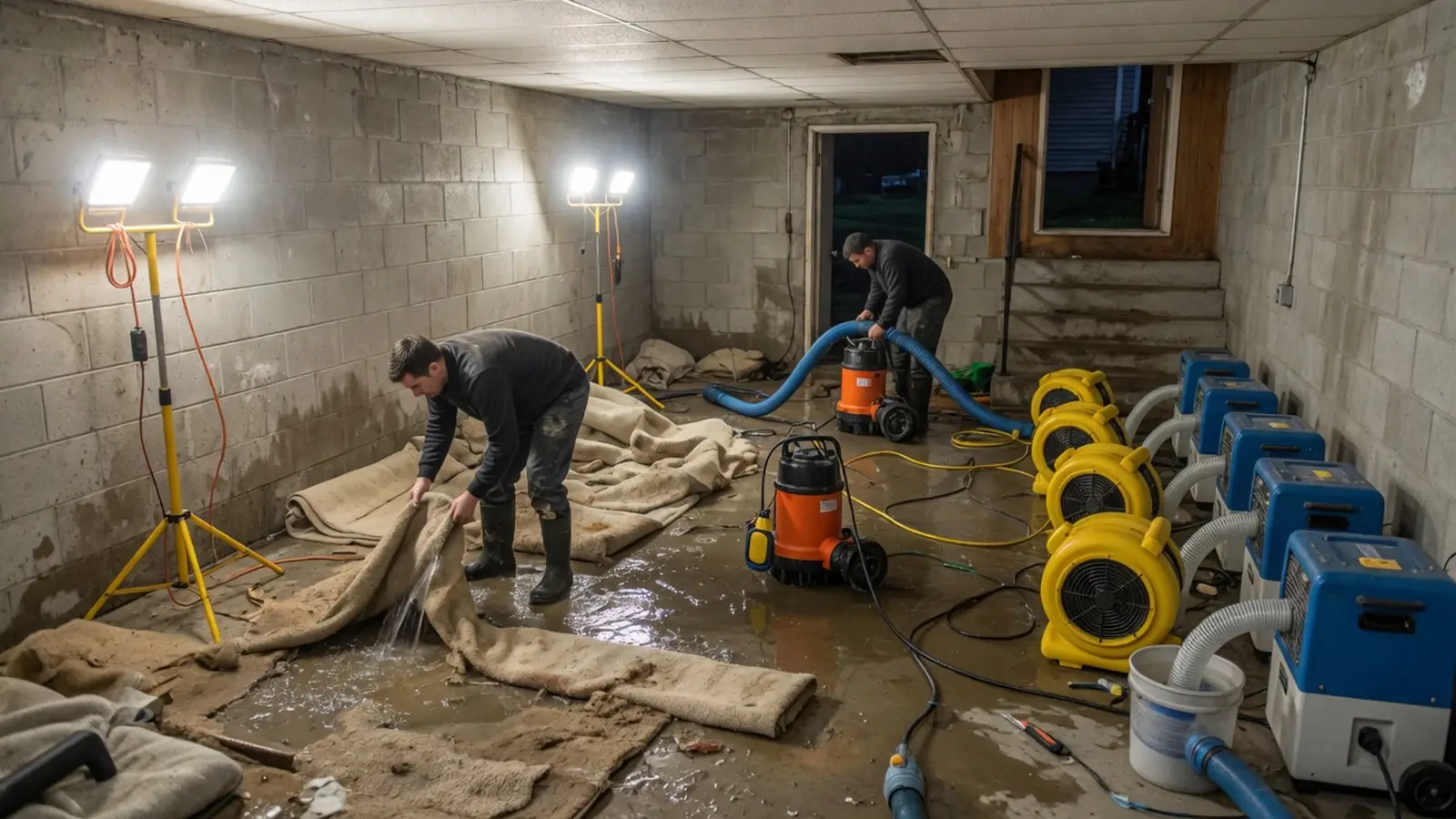
Brandon Storm Damage
Severe weather can compromise roof assemblies and saturate structural wall cavities within minutes. We arrive quickly to isolate electrical hazards, document damage for your insurance carrier, and extract standing water before secondary microbial growth starts. Our certified drying protocols stabilize your framing timbers and subflooring with commercial grade efficiency.
Call (601) 555-0170 if water is flowing now.
Prefer to talk? (601) 555-0170
Emergency Storm Damage Restoration And Structural Drying
Severe weather rolling across central Mississippi frequently drives moisture deep into structural framing.
A pattern echoed in public discussions is when a resident notices persistent moisture and bubbling paint along exterior wall baseboards following hurricane-force wind-driven rain, seeking advice on how to detect hidden water pockets inside wall cavities without destroying the drywall.
We locate trapped moisture pockets using non-destructive thermal imaging and calibrated moisture meters before structural decay sets in.
After attempting DIY flood cleanup with shop vacs and household box fans, homeowners frequently experience rapid mold colonization behind baseboards within 48 hours and require professional drying.
Our field technicians deploy commercial desiccant dehumidifiers and high-velocity air movers to thoroughly dry saturated wall assemblies.
For comprehensive recovery, our complete water damage restoration services restore structural framing to dry equilibrium standards.
Step-by-Step Storm Water Extraction And Structural Drying
When severe weather strikes, establishing a safe, structured mitigation plan protects your property from secondary microbial growth.
- Hazard Assessment And Insurance Documentation. For properties flooded during heavy tropical storm conditions, our immediate priorities include electrical safety, documenting damage for insurance adjusters, and establishing an emergency dry-out protocol before mold takes over.
- Controlled Extraction And Flood Cuts. Homeowners often describe questioning whether cutting a standard 2-foot drywall flood cut is sufficient to remove contaminated storm water and dry out wet framing studs, or if insulation requires cutting up to 4 feet. In ground-level subfloors, pumping out flooded crawl spaces eliminates pooled groundwater before structural sills swell.
- Industrial Structural Drying. We install commercial LGR dehumidifiers and directed airflow systems to pull bound water out of dense framing timbers and subflooring.
- Microbial Defense And Moisture Verification. Technicians monitor daily drying logs until wood moisture content drops below sixteen percent, ensuring professional mold remediation protocols remain unnecessary.
Accurate Psychrometric Assessment Without Inflated Scope
Property owners often question whether an urgent five-figure remediation and full encapsulation quote is justified or an aggressive scare tactic for minor cosmetic mildew on crawl space foundation piers. Similarly, when someone requests a sanity check after a contractor quoted $7,000 to remediate a minor, localized plumbing supply leak behind bathroom drywall, wondering if negative air machines and full containment plastic are overkill, our response is grounded in actual psychrometric readings. We never inflate scope with unneeded demolition or exaggerated containment charges, focusing strictly on verified structural moisture needs.
Attic Storm Intrusion Mitigation
When wind-driven rain penetrates roof vents or attic AC units overflow, water migrates into ceilings below. Facing an intimidating $20,000 estimate for mold remediation following attic AC condensation overflow leaves many wondering if high-dollar air scrubber fees and invasive drywall demolition are standard industry practice, which is why we provide targeted structural drying without unnecessary teardowns.
Wall Cavity Cavitation And Drying
Wind-driven precipitation seeps behind siding, creating damp wall cavities that risk rot. We utilize precision cavity injection drying to circulate warm dehumidified air through framing without removing sound drywall.
Crawl Space Storm Flooding Drainage
A homeowner discovers inches of standing water pooled across their dirt crawl space floor after heavy downpours, asking how urgently it must be pumped out and how to distinguish rising groundwater from a ruptured plumbing line. We extract trapped runoff, isolate moisture sources, and restore subfloor framing.
Dedicated Moisture Control And Fast Emergency Response
Every storm recovery project begins with honest psychrometric evaluations and scientific moisture tracking. We deploy specialized drying equipment calibrated to regional humidity and temperature conditions, protecting structural integrity without unnecessary demolition.
- 12Zip Codes Served
- 6Service Areas
- 3Services Offered
Local property owners rely on our emergency response crews when severe weather compromises roofs, walls, and foundations. Here is what residents have shared about our storm recovery performance.
“Our previous remediation contractor left soaked insulation festering inside the wall after a tropical downpour and claimed the moisture was normal. This company came in with thermal cameras, stripped the hidden moldy batts, and dried our framing studs completely. They completely turned around a stressful mess without any fuss.”
Marcus T.
“When high winds ripped off our soffit vents and drenched the ceiling, the crew dried the joists and prevented drywall collapse. I already sent my next-door neighbor their contact information when their back porch flooded two weeks later. You rarely see technicians take that level of care with structural testing.”
Elena V.
“During the initial water extraction from our flooded living room, the team uncovered saturated subflooring beneath the floorboards that was buckling near the fireplace. Instead of panicking or halting progress, they adjusted the dehumidifier layout and dried the timbers from underneath without damaging the hearth. Their calm handling of that surprise saved us thousands in structural carpentry.”
Garrett K.
“A severe thunderstorm flooded our ground-level rental unit just four days before incoming tenants were scheduled to unpack. The crew worked around the clock with industrial desiccant equipment and delivered a certified moisture clearance letter right on deadline. The tenants moved in smoothly on Saturday morning without detecting a trace of dampness.”
Nadine H.
Frequently Asked Questions
How quickly should structural drying begin after storm water intrusion?
Structural drying must begin within twenty-four to forty-eight hours after storm intrusion to halt wood rot and active mold colonization. Immediate extraction and airflow control stop moisture from migrating deeper into wall cavities and joists.
Is a two-foot drywall flood cut always sufficient after storm flooding?
A two-foot flood cut works if water remained low, but saturated fiberglass insulation often wicks higher, requiring cuts up to four feet. Removing wet insulation above the water line is necessary to dry framing studs completely.
How do technicians detect trapped storm water behind exterior wall assemblies?
Technicians use pinless moisture meters and infrared thermal imaging to identify hidden damp pockets without tearing apart wallboards. This non-invasive assessment pinpoints elevated moisture behind baseboards and paint bubbles accurately.
Does storm water pooled in a dirt crawl space require immediate extraction?
Standing crawl space water requires immediate pumping because moisture evaporates upward into floor joists and breeds wood-decay fungi. Rapid extraction prevents subfloor framing damage and helps distinguish rising groundwater from plumbing breaks.
Can high humidity and moisture meter readings be resolved without gutting walls?
Commercial desiccant dehumidifiers and high-pressure cavity air injection dry damp walls in place without invasive framing demolition. If water intrusion is addressed quickly and insulation remains clean, sound drywall can often be preserved.