
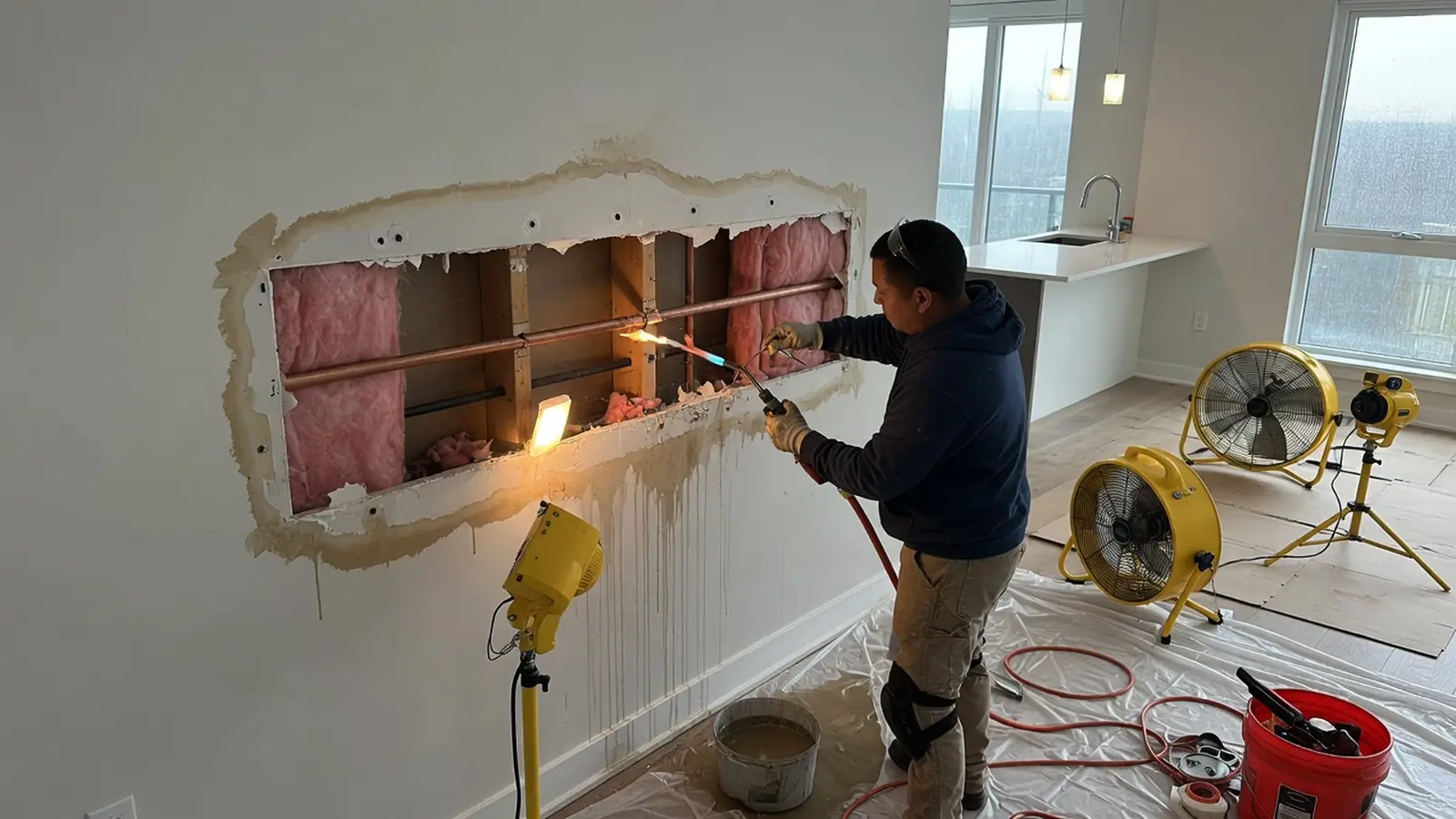
Brandon Crawl Space Water
Central Mississippi's prolonged summer dew points cause warm outdoor air entering vented crawl spaces to condense against subfloors chilled by central air conditioning. When ground moisture and flooding pool beneath your home, structural timbers and floor systems suffer immediate stress. Our dedicated team deploys industrial extraction pumps and commercial dehumidifiers to restore dry, stable conditions under your foundation.
Questions first? (601) 555-0170.
Prefer to talk? (601) 555-0170
Restoring Crawl Space Stability Beneath Your Home
Moisture issues under local homes rarely remain confined to the crawl space for long.
Neglected crawl spaces accumulate excessive moisture that causes subfloor cupping, hardwood buckling, and persistent odors.
A common pattern echoed in public discussions is a panicked homeowner discovering deep water under their home after a storm and wondering if running basic sump pumps and utility fans is enough to stop joist deflection.
Our technicians address these risks by providing comprehensive water damage restoration for flooded foundations before wood fibers decay.
Professional vapor barrier installation and encapsulation isolate subflooring from ground dampness, preventing structural mold infestations.
Every assessment includes probing foundational piers and measuring joist moisture content across Rankin County neighborhoods near Crossgates.
Engineered Remediation For Damp Crawl Spaces
Homeowners often describe attempting DIY flood cleanup with shop vacs and household fans only to find rapid mold colonization within 48 hours. Our engineered four-step procedure eliminates trapped moisture systematically.
- Pumping Standing Water And Silt. Submersible pumps must remove standing pool water and saturated silt before laying replacement heavy-duty polyethylene vapor barriers over exposed earth. If your property is recovering from severe storm damage and flash flooding, rapid extraction prevents ground saturation from migrating upward.
- Structural Moisture Assessment. Technicians map wet framing with penetrating meters and thermal imaging to calculate exact moisture ratios across joists, girders, and subfloor sheathing.
- Commercial Dehumidification. High-capacity low-grain refrigerant dehumidifiers and directional air movers extract bound moisture from framing timbers until equilibrium is restored.
- Encapsulation And Antimicrobial Treatment. We treat structural framing with botanical antimicrobials before sealing the crawl space floor with durable, puncture-resistant vapor barriers.
Protecting Your Home From Ground Up
Our technicians adhere strictly to industry standards for structural drying and crawl space remediation. We verify moisture content using calibrated digital meters rather than guesswork, ensuring framing lumber reaches safe equilibrium before wrapping any project. Every barrier seam is taped with heavy-duty bonding adhesive, leaving your crawl space isolated from ground moisture, persistent dampness, and wood rot.
Crawl Space Water Extraction
Heavy submersible pumps remove deep standing water and muddy silt after pipe breaks or storm runoff. Rapid extraction stops foundation timber from soaking up excess water.
Subfloor Moisture Remediation
Commercial dehumidifiers pull bound moisture directly out of floor joists and subflooring. Controlled drying stabilizes warped wood framing and prevents fungal growth.
Vapor Barrier Installation
Heavy-duty polyethylene ground covers isolate your foundation from persistent soil dampness. Complete sealing keeps outdoor moisture from penetrating living spaces above.
Dedicated Moisture Control For Local Foundations
Our approach centers on thorough moisture removal, accurate diagnostics, and proven drying protocols to protect residential structures across the region.
- 10Zip Codes Served
- 6Service Areas
- 3Services Offered
Homeowners across the area rely on our prompt extraction and structural drying services to protect their crawl spaces from severe moisture damage. Here is what local property owners say about their experience working with our crew.
“Another outfit quoted a cheap price to just pump the standing water and leave standard box fans running on the dirt. The crew explained why wet silt and saturated joists needed commercial dehumidification and antimicrobial wash, which saved my floor framing from rot. Paying for thorough work prevented what would have been a catastrophic subfloor failure.”
Marcus T.
“Our insurance adjuster required specific documentation and moisture log readings before approving the crawl space claim. The team recorded thermal imaging data and daily drying charts that satisfied the inspector immediately without any pushback. Having those detailed moisture records made the entire claim process painless.”
Elena R.
“Water was gushing into our crawl space late on a Saturday night after a mainline ruptured under the floor. These guys answered my call immediately and had an extraction pump working beneath the house within two hours. Their rapid response stopped the moisture from seeping upward into our hardwood flooring.”
Derek S.
“I inspected the crawl space myself after the technicians finished laying the heavy vapor barrier across the ground. Every seam was overlapped smoothly and taped with clean, airtight precision around all the foundation piers. The level of neatness and tight sealing under the house was impressive.”
Hannah B.
Frequently Asked Questions
Can cupped oak floorboards above a flooded crawl space flatten out with commercial dehumidification, or do they have to be torn out and replaced?
Cupped oak floorboards can often flatten out if commercial dehumidification begins before wood cell structures suffer permanent crowning damage. When saturated air beneath the subfloor creates a moisture gradient, the bottom of the plank expands faster than the top. Controlled, gradual drying pulls excess moisture from the joists and subfloor, allowing the hardwood planks to slowly settle back down. If the boards remain wet too long or buckle past the fasteners, selective replacement becomes necessary.
Must crawl space framing be scrubbed and treated with antimicrobial spray before installing a vapor barrier?
Framing lumber must be professionally cleaned and treated with antimicrobial spray to kill active fungal growth before sealing a crawl space. Covering active mold with heavy polyethylene traps spores against organic wood framing, where dampness accelerates rot. Technicians HEPA-vacuum and scrub the floor joists and subflooring before applying EPA-registered fungicidal coatings, ensuring the structural framing is completely sanitary before encapsulation.
Is running a basic utility sump pump and box fan enough to dry out a flooded crawl space?
Standard pumps and box fans cannot extract bound moisture from wood framing or lower relative humidity enough to prevent rot and joist deflection. While a utility pump moves bulk surface water, household fans merely circulate damp, humid air without removing water vapor. Professional remediation requires commercial low-grain refrigerant dehumidifiers to draw deep moisture out of structural joists.
How long does the structural crawl space drying process typically take?
Complete structural crawl space drying typically takes three to five days depending on water depth, framing saturation, and soil conditions. Technicians track progress with daily moisture readings across subflooring, sill plates, and support beams. Equipment remains operational until structural lumber reaches safe moisture content below fifteen percent.
Why does crawl space moisture become worse during Mississippi summers?
Summer dew points cause warm outdoor air entering vents to condense against cold subflooring chilled by indoor air conditioning. When humid ambient air meets chilled wooden surfaces, relative humidity spikes above ninety percent beneath the living space. Encapsulating the space with thick vapor barriers prevents this condensation cycle entirely.