
Brandon Water Damage Restoration MS
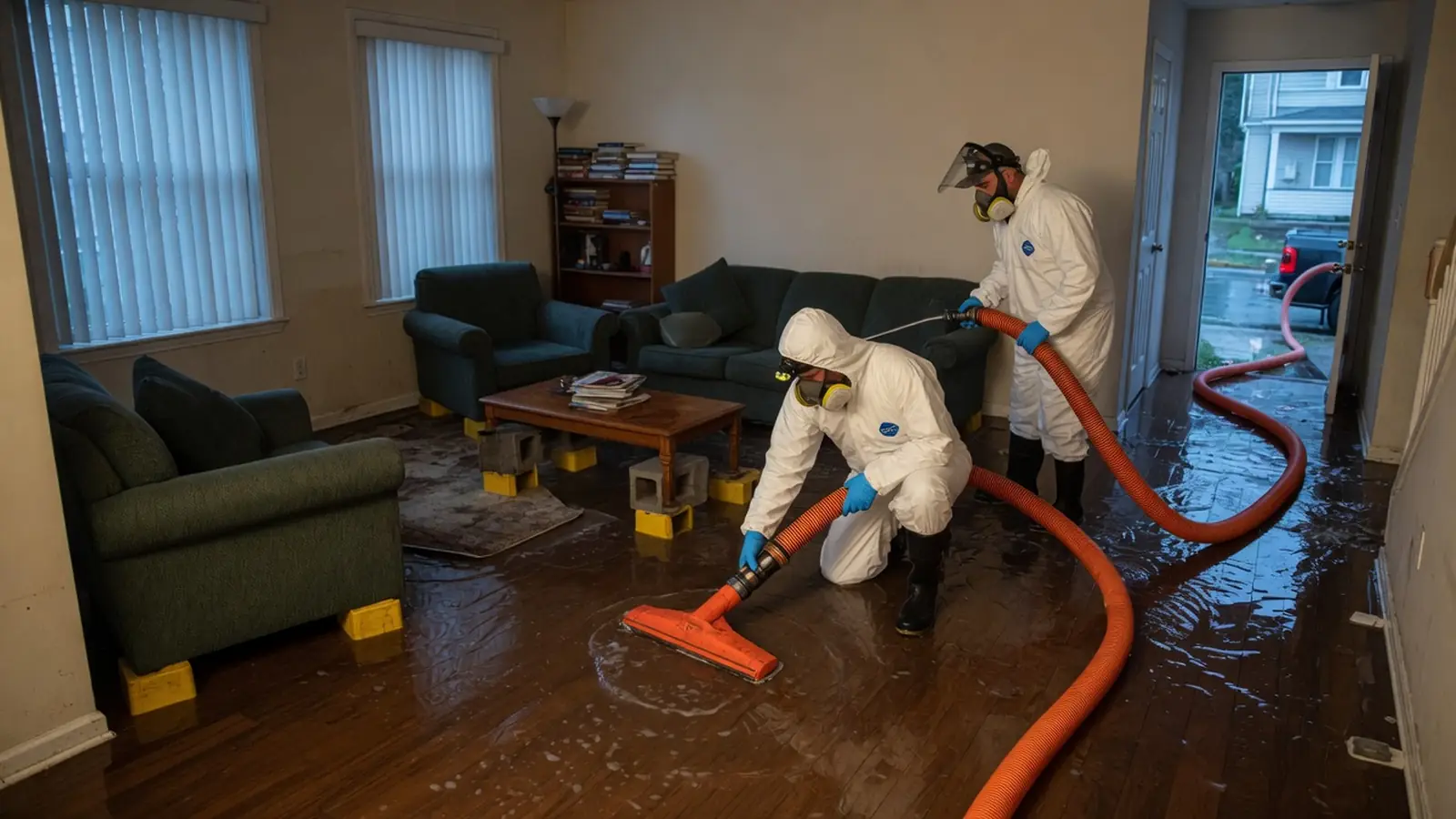
Immediate floodwater containment after a storm is critical to stabilize the structure and prevent escalating secondary losses. Certified IICRC technicians apply standardized rapid-drying protocols essential to halt progressive structural water damage. Our regional restoration response team mobilizes high-capacity air movers and extractors to protect your property immediately.
Water still running? Call (601) 555-0170.
Prefer to talk? (601) 555-0170
Dedicated Restoration Specialists
Our crew delivers structural drying and rapid moisture extraction tailored to regional architectural conditions.
About 3% of housing units in this municipal area (280 of 9,530) were built before 1960, the era of galvanized steel supply lines and cast iron drains prone to sudden failures.
About 5% of housing units here (522 of 9,530) were built in the 1960s, overlapping the years aluminium branch wiring was installed.
About 33% of housing units in the area (3,117 of 9,530) were built in the 1970s and 1980s, overlapping the years polybutylene supply piping was commonly installed and frequently ruptures.
About 41% of local housing units (3,919 of 9,530) were built before 1980, the period when asbestos-containing materials and lead paint were still in use, requiring containment during demolition.
When unexpected basement pooling strikes, homeowners trust us to resolve standing crawl space water after heavy downpours before structural framing rots.
A pattern echoed in public discussions is homeowners discovering inches of standing water pooled across a dirt crawl space after heavy downpours, unsure how urgently it must be pumped out or how to distinguish rising groundwater from a ruptured plumbing line.
Every project concludes with comprehensive moisture mapping and digital thermal imaging to confirm absolute dryness across all framing cavities.
How We Extract And Dry Water Invasions
Severe convective weather regularly batters the county, as NOAA radar recorded 975 hail signatures within about 15 miles locally between 2021-2025 (2021: 144, 2022: 195, 2023: 349, 2024: 69, 2025: 218). In fact, the heaviest recent hail year across the immediate 15-mile radius was 2023, with 349 radar hail signatures inside a 15-mile radius causing widespread roof penetrations and interior water ingress. We follow a systematic restoration protocol designed to stabilize structures after severe storm damage and hidden line ruptures.
- Immediate Containment And Extraction. Our technicians arrive with industrial submersible pumps and truck-mounted extractors to remove standing floodwater immediately from affected floors.
- Thermal Moisture Cavity Detection. Undetected pipe leaks inside wall cavities provide the persistent moisture required for mold colonies to develop out of sight, which is why we inspect framing with penetrating meters and infrared cameras.
- Industrial Structural Drying. We deploy commercial LGR dehumidifiers and high-velocity air movers to pull moisture out of hardwood, subflooring, and structural studs.
- Antimicrobial Treatment And Verification. Technicians apply EPA-registered antimicrobials across exposed surfaces and log final psychrometric readings to verify structural moisture targets are met.
Precision Drying Standards
Ground stability directly influences foundation movement and subsequent plumbing line stress, as the single most extensive soil unit mapped around this territory is Smithdale-Providence association, 8 to 35 percent slopes, covering about 47,980 acres of MS121. Homeowners often describe asking for a sanity check after receiving an inflated quote to remediate a minor plumbing supply leak behind drywall, wondering whether negative air machines and full containment plastic are overkill. We maintain strict ethical workmanship standards, deploying targeted containment only when necessary and guaranteeing our rapid-drying process returns materials to dry standard without unnecessary demolition.
Rapid Structural Drying
Our certified crew deploys high-volume air movers and industrial desiccant dehumidifiers to extract trapped dampness from subfloors, joists, and drywall cavities. We monitor daily psychrometric readings to return framing to baseline dry standards.
Crawl Space Water Mitigation
Subsurface water behavior is heavily dictated by terrain geology. The dominant mapped soils across the territory (MS121) by acreage are Smithdale-Providence association, 8 to 35 percent slopes; Smithdale-Providence complex, 8 to 17 percent slopes; Kipling-Falkner association, undulating; Providence silt loam, 2 to 5 percent slopes, eroded. We mitigate foundation seepage and subfloor dampness with industrial sump systems and specialized drying chambers.
Burst Pipe Moisture Extraction
When pressurized supply lines fail inside walls or ceilings, our emergency technicians extract standing water immediately to prevent ceiling collapses. We open targeted drying pockets and apply EPA-registered antimicrobials to safeguard framing integrity.
Our Commitment To Scientific Structural Drying
We approach every water intrusion with calibrated diagnostic equipment and psychrometric monitoring rather than guesswork. Property owners can expect transparent communication, non-invasive moisture tracking, and rapid containment designed to protect building integrity.
- 10Zip Codes Served
- 4Service Areas
- 3Services Offered
Local property owners rely on our certified technicians during severe plumbing emergencies and structural water intrusions. Read firsthand feedback from residents about how our rapid extraction and drying methods safeguarded their homes.
“Severe road flooding initially blocked heavy equipment transit during the storm, but the crew rerouted through high ground and showed up with commercial extractors within hours. They worked late into the night running air movers to make up for lost time. Our living room hardwood was completely saved thanks to their relentless pace.”
Marcus T.
“Our elderly mother relies on a walker, so the crew carefully taped down every heavy-duty power cord and isolated the loud dehumidifiers behind closed containment doors. They checked in with her before rearranging any furniture to ensure her walking paths stayed wide and unobstructed. Having technicians who prioritized her daily comfort made a chaotic disaster manageable.”
Elena R.
“Another contractor gave us a cheaper bid but admitted they planned to dry the baseboards without checking behind the wet drywall. This company brought out thermal imaging cameras, demonstrated that moisture was already wicking two feet up the interior insulation, and pulled the damp material before hidden mold could start. Paying for their thorough moisture mapping saved us from a costly structural teardown later.”
David H.
“Because our older residence had older building materials, the crew immediately pulled proper environmental testing clearances before disturbing any affected drywall. Their lead technician walked the county inspector through every step of the stabilization log without a single hitch. Everything passed code inspection on the first walkthrough, letting our reconstruction start without delay.”
Claire W.
Frequently Asked Questions
How quickly must water extraction begin after an indoor pipe bursts?
Water extraction should begin within twenty-four to forty-eight hours to prevent progressive structural wood rot and active microbial growth. Certified IICRC technicians apply standardized rapid-drying protocols to halt moisture migration through floorboards and framing cavities before deep structural deterioration occurs.
How much does professional water damage restoration typically cost?
Professional restoration costs depend entirely on the water category, contamination levels, and the square footage of affected drywall or floors. Clean supply line breaks require significantly less specialized sanitation equipment than sewage backups or storm floodwater extractions that demand antimicrobial applications and controlled demolition.
Does homeowners insurance cover emergency water extraction and drying?
Most standard policies cover sudden and accidental water damage like ruptured plumbing, while excluding gradual leaks or rising overland floods. Our team documents moisture mapping logs, thermal imagery, and psychrometric readings directly for your insurance adjuster to accelerate claim validation.
How do technicians detect hidden moisture trapped behind bathroom walls?
Technicians use non-invasive infrared thermal cameras and calibrated pinless moisture meters to pinpoint trapped dampness without wall teardowns. Undetected pipe leaks inside wall cavities provide the persistent moisture required for mold colonies to develop out of sight, making precise diagnostic imaging crucial.
How long does the structural dehumidification and drying process take?
Complete structural drying typically takes three to five days depending on material density, airflow velocity, and ambient humidity conditions. Commercial LGR dehumidifiers and high-velocity centrifugal air movers run continuously until daily moisture sensor readings hit verified equilibrium dry standards.